Buying Your First Bow: A Beginner's Guide That Won't Overwhelm or Oversell You
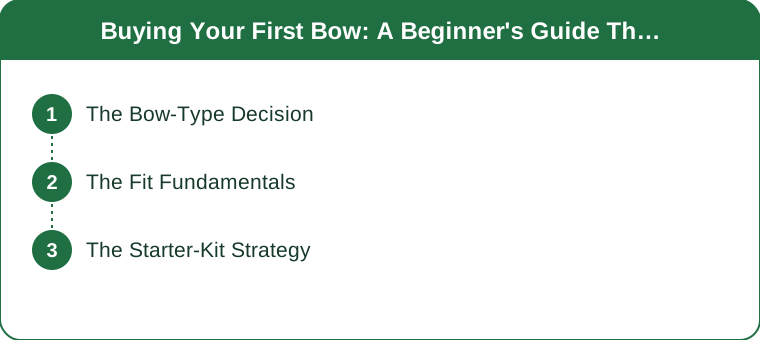
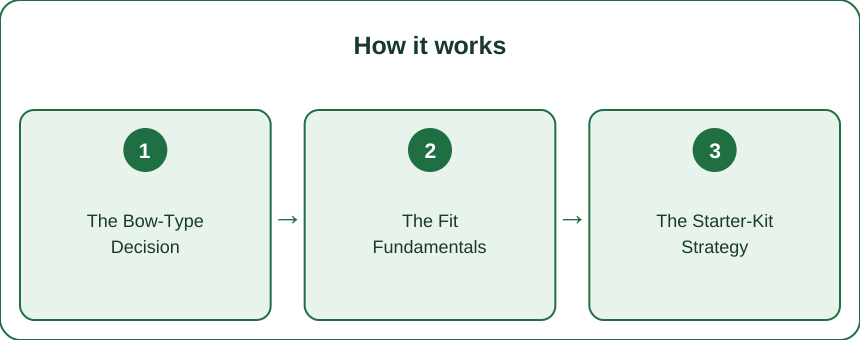
Buying a first bow is where archery beginners get either overwhelmed by jargon or oversold by shops — the draw-weight confusion, the compound-versus-recurve debate, the accessories that add up fast. The no-nonsense guide: the bow-type decision, the fit fundamentals and the starter-kit strategy that won’t drain your wallet.
The Bow-Type Decision
Recurve, compound or barebow: the recurve case (the classic, simpler, Olympic-style bow — the great-for-learning-fundamentals choice; the build-the-skill purity that the beginner chapter favors), the compound case (the pulley-assisted, let-off bow — the easier-to-hold-at-full-draw, hunting-and-target popular; the more-mechanical, more-accessories reality), the barebow-and-traditional tier (the minimalist, instinctive styles — the simplicity-lover’s path), the try-before-you-buy imperative (the range-rental-and-lesson before purchasing — the feel-the-difference test; the club-or-shop guidance from the mental-game chapter’s community), and the beginner-recommendation honesty (the recurve as the common learn-the-fundamentals starting point for target archery — the skill-first logic; the you-can-switch-later reassurance).
The Fit Fundamentals
Getting the bow that fits YOU: the draw-weight reality (the start-lighter-than-you-think rule — the too-heavy bow that wrecks form and enjoyment; the build-up-gradually principle from the back-tension chapter), the draw-length matter (the arm-span-based measurement that determines fit — the properly-measured draw length; the shop-fitting importance), the eye-dominance check (the dominant-eye determining right-or-left-handed bow — the often-surprising test; the get-this-right-first fundamental), the bow-length-and-size (the matched-to-your-body sizing — the too-big-or-small avoided), the professional-fitting value (the archery-shop-or-coach fitting that prevents the expensive mistake — the fit-over-guessing; the invest-in-the-fitting wisdom), and the women-specific note (the draw-weight-and-fit calibrated to you, not defaulted — the beginner-women chapter’s tailored approach).
The Starter-Kit Strategy
Not overspending on day one: the essentials-only start (the bow, arrows, and basic accessories — the what-you-actually-need list; the skip-the-fancy-extras discipline), the starter-package option (the beginner-bundle that includes the basics matched together — the good-value entry; the shop-recommended kit), the borrow-and-rent-first tier (the club equipment and rentals while you learn — the try-the-sport before the investment; the budget-active logic for archery), the where-to-spend-vs-save (the money on the fitting-and-decent-bow, the savings on the upgrade-later accessories — the strategic budget), the buy-once-cry-once-vs-outgrow balance (the not-too-cheap-but-not-pro-level starter — the room-to-grow bow; the avoid-the-throwaway-purchase), and the frame (the first-bow purchase as a fit-first, don’t-overspend, try-before-you-buy decision — the beginner set up to succeed without the overwhelm or the oversell; the sport entered wisely). Try it, get fitted, start light and essential: the first bow, bought right.
Buying a first bow: try recurve and compound at a range first, get professionally fitted (draw weight, draw length, eye dominance all matter), and start lighter than you think. Buy essentials-only or a starter bundle, borrow while you learn, and spend on the fitting, not the fancy extras.
Keep Reading
This article is for general informational and styling purposes only. Fit, sizing, and product availability may vary.