An Archery Practice Routine That Actually Improves You
Shooting a lot of arrows is not the same as practising, and plenty of archers plateau for years doing exactly that — repeating whatever they already do, at whatever quality they already do it. Here is why volume alone does not improve you, how to structure practice, and how to track progress.

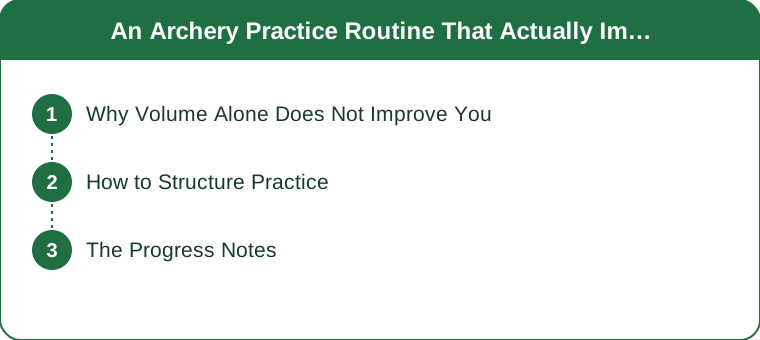
Why Volume Alone Does Not Improve You
Repetition without direction: the the-you-groove-what-you-repeat (the repetition reinforcing whatever you already do from the anchor-point logic — the groove-what-you-repeat), the the-fatigue-degrades-form (the tired shooting embedding poor form from the back-tension logic — the fatigue-degrades-form), the the-no-focus-no-change (the practice without a specific focus changing nothing from the aiming logic — the no-focus-no-change), the the-consistency-is-the-actual-skill (the consistency, not power, being the skill being trained from the anchor-point logic — the consistency-is-the-skill), the the-scoring-is-not-practising (the shooting for score not being the same as practising from the mental-game logic — the scoring-is-not-practice), and the reframe (the archery practice as directed repetition — because you groove whatever you repeat, and volume without focus simply embeds what you already do).

How to Structure Practice
Building the session: the the-warm-up-the-shoulders-and-back (the warming the shoulders and back before drawing from the back-tension logic — the warm-up), the the-blank-bale-work-first (the close-range blank bale shooting to isolate form from the back-tension logic — the blank-bale), the the-one-technical-focus-per-session (the a single technical focus each session from the anchor-point logic — the one-focus), the the-anchor-and-release-consistency-drills (the drills targeting anchor point and release from the anchor-point logic — the anchor-drills), the the-back-tension-work (the specific back tension drills from the back-tension logic — the back-tension-work), the the-then-shoot-at-distance (the moving to distance work once form is set from the aiming logic — the distance-work), the the-stop-before-form-degrades (the ending the session before fatigue takes over from the back-tension logic — the stop-before-fatigue), and the the-a-short-mental-routine-every-shot (the a consistent pre-shot routine on every arrow from the mental-game logic — the pre-shot-routine).
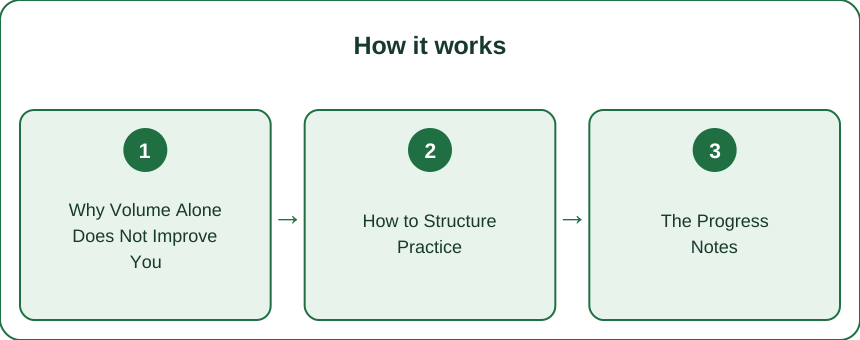
The Progress Notes
Tracking improvement: the the-track-groups-not-just-scores (the tracking group size rather than only scores from the aiming logic — the track-groups), the the-record-the-technical-focus (the noting which focus you worked each session from the anchor-point logic — the record-the-focus), the the-film-your-form-occasionally (the filming your form to see what you cannot feel from the back-tension logic — the film-your-form), the the-quality-over-arrow-count (the counting good arrows rather than total arrows from the anchor-point logic — the quality-over-count), the the-coaching-shortcuts-years (the a few coaching sessions saving years of plateau from the back-tension logic — the coaching-helps), the the-consistent-equipment-setup (the keeping your setup consistent while training form from the first-bow logic — the consistent-setup), the the-patience-with-the-plateau (the accepting plateaus as part of the process from the mental-game logic — the patience-with-plateaus), and the frame (the archery practice as structured — warm-up, blank bale, one technical focus, then distance — stopped before fatigue and tracked by group size — practice that actually improves you. Warm up, shoot blank bale first, work one technical focus per session, stop before form degrades, and track group size).
Shooting a lot of arrows is not the same as practising, and plenty of archers plateau for years doing exactly that — repeating whatever they already do, at whatever quality they already do it. Volume alone does not improve you because you groove what you repeat, fatigue degrades form, no focus means no change, consistency is the actual skill, and scoring is not practising. Structure practice with a shoulder and back warm-up, blank bale work first, one technical focus per session, anchor and release drills, back tension work, then distance shooting, stopping before form degrades, and a short mental routine every shot. Track progress by group size rather than scores, recording the technical focus, filming your form, counting quality over arrow count, getting some coaching, keeping equipment consistent, and being patient with plateaus. Practice that actually improves you.
Keep Reading
This article is for general informational and styling purposes only. Fit, sizing, and product availability may vary.