Shooting Archery in Glasses: What Actually Changes and How to Fix It
Quick Answer: At full draw your head turns toward the target, so you look through the outer edge of the lens rather than its optical centre - which introduces distortion and shifts apparent aim. Progressive and bifocal lenses make it worse because the corridor of usable focus is narrow and in the wrong place. Fix it with single-vision lenses, larger or rimless frames, and a repeatable head position, and a lot of unexplained horizontal grouping problems resolve.
Your form is fine, your anchor is consistent, and your groups still drift in a way nobody at the club can explain. Then someone asks what happens when you turn your head, and it becomes obvious.
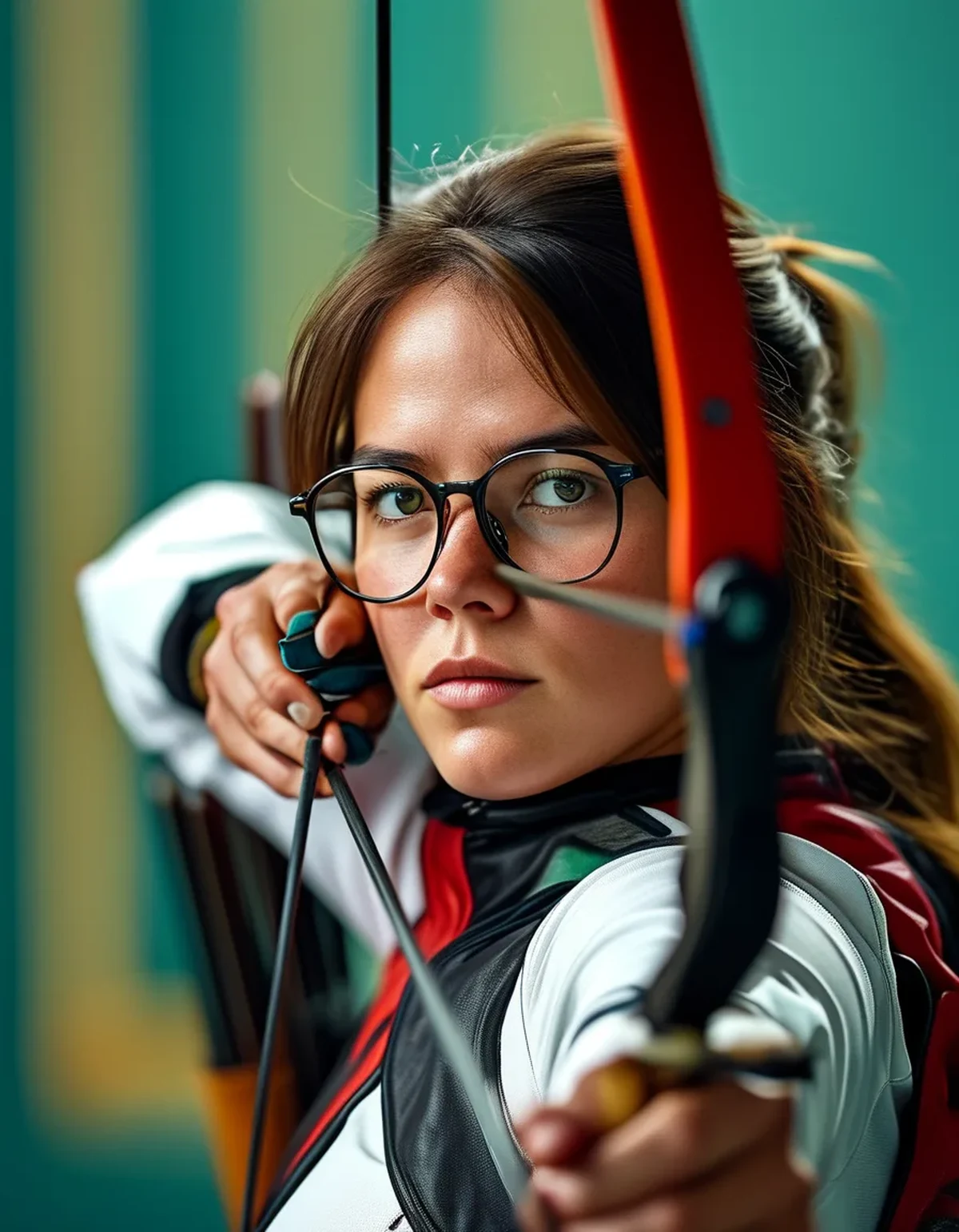
Why does turning your head break the optics?
Lenses are corrected for looking through the optical centre, which sits in front of your pupil when you look straight ahead. Every prescription lens has increasing distortion as you move toward the edge, and the stronger the prescription, the more pronounced that becomes.
At full draw your head rotates toward the target while your eyes rotate further. So your line of sight leaves through the outer or inner portion of the lens rather than the centre. You are looking through the part of the lens with the most aberration, at the exact moment precision matters most.
The effect is a small apparent shift in target position, and because it is consistent, it feels like your aim rather than your glasses. That is what makes it so persistent as a diagnosis - it does not look like a vision problem, it looks like a form problem.
Frame edges compound it. A narrow or thick frame can put the rim, the hinge, or the temple arm directly in the sight line at draw, and many archers unconsciously adjust head position to see past it - which then shows up as an inconsistent anchor.
And this is more pronounced for higher prescriptions and for astigmatism. Astigmatic correction is orientation-dependent by nature, so looking through an off-centre part of the lens changes the correction in a way that a simple spherical prescription does not.
What do progressive and bifocal lenses do to a shot?
Progressives have a narrow corridor of clear vision that runs down the centre of the lens. Step outside it horizontally and you get blur and swim. At full draw, with the head turned, you are almost certainly outside it.
The reading portion sits at the bottom, where you least want it. Looking slightly down at a sight or a target through the reading add produces significant blur at distance, and archers with progressives often report the target being sharp in practice and vague at full draw without knowing why.
Bifocals put a hard line in the field of view. That visible edge crossing the sight picture is genuinely distracting, and where the line falls changes with any small head position change - making it a source of inconsistency rather than a constant.
The standard answer is a dedicated pair of single-vision distance lenses for shooting, and it is the fix that most reliably works. Many archers keep a cheap second pair purely for the range, and describe the difference as immediate.
And if you use a scope or a magnified sight, the interaction gets more complicated still - the eye relief and the lens position interact, and a shooting-specific setup matters more. Discuss it with your optician, who will generally be interested; shooting glasses are a recognised category and there are standard approaches.

Myth vs Fact: Archery and Eyewear
Myth: contact lenses solve everything. Fact: they solve the off-centre distortion problem completely, because the lens moves with the eye - which is a real and substantial advantage. But they can dry out on a windy outdoor range, and toric lenses for astigmatism can rotate slightly, which introduces its own small inconsistency. Very good for most people, not automatically perfect.
Myth: you should shoot with your dominant eye regardless of prescription. Fact: eye dominance matters, but so does which eye has better corrected vision. If your dominant eye has a substantially worse prescription, this is worth discussing with a coach rather than treating dominance as the only factor.
Myth: bigger frames are always better. Fact: larger lenses give more usable area before the frame intrudes, which helps. But very large lenses in a strong prescription have more edge distortion at the periphery, and heavy frames slide down a sweaty nose. Rimless or semi-rimless in a moderate size is usually the practical answer.
Myth: if your groups are consistent, your glasses are fine. Fact: consistent glasses errors produce consistent group displacement, which you then sight out. The problem appears when anything changes - a new frame, a slightly different head position, shooting at a different distance - and the sight setting no longer holds. Unexplained sight changes between sessions are a classic signature.
Myth: this only matters at high levels. Fact: it matters most for beginners, because a beginner cannot distinguish a vision artefact from their own inconsistency and will spend months adjusting form to compensate for a lens edge.
What should you actually do about it?
Get a single-vision distance pair for the range if you wear progressives or bifocals. This is the single highest-value change, and a basic pair is not expensive. Ask specifically for distance-only, and mention it is for a sport where you look through the outer part of the lens.
Choose frames with a large lens area and thin rims. Rimless or semi-rimless removes the frame edge from the sight line entirely. Avoid thick temple arms, which intrude when the head is turned.
Fit them properly and secure them. A frame that slides changes the optical centre position with every shot, which is exactly the inconsistency you are trying to remove. Adjustable nose pads, a strap or retainer cord, and a proper fitting are worth more than the lens choice for many people.
Standardise head position and check it deliberately. Because the lens correction varies across its surface, a repeatable head turn is more important for a glasses wearer than for anyone else. Film yourself from above once - most people are surprised by how much their head angle varies.
Consider contacts for competition even if you wear glasses day to day. Many archers do exactly this, and it removes the whole category of problem for the sessions that count.
And get your prescription checked if it has been more than a couple of years. Archery is a precision task at distance, and a prescription slightly out of date shows up here well before it shows up in ordinary life. Small changes in astigmatism in particular have a disproportionate effect on a sight picture.
FAQ: Archery and Glasses, Answered
Can you shoot archery with glasses?
Yes, and many archers do at every level. The main issues are looking through the off-centre part of the lens at full draw, frame edges intruding into the sight line, and progressive or bifocal lenses putting blur where you need clarity. All three have straightforward fixes.
Are progressive lenses bad for archery?
They are the most problematic type, because the clear corridor is narrow and vertical while your head is turned at full draw, and the reading add sits at the bottom of the field of view. A dedicated single-vision distance pair for shooting is the standard solution and usually makes an immediate difference.
Are contacts better than glasses for archery?
Generally yes for optics - the lens moves with the eye, so there is no off-centre distortion and no frame in the sight line. The trade-offs are dryness on windy outdoor ranges and slight rotation with toric lenses for astigmatism. Many archers wear glasses daily and contacts for competition.
Why do my arrows group left or right for no clear reason?
Horizontal drift with otherwise good form is worth checking against your eyewear. Looking through the outer edge of a lens shifts apparent target position, and a frame edge in the sight line makes people adjust head position unconsciously. Try a session in contacts or a single-vision pair and compare.
TL;DR:
- At full draw you look through the outer edge of the lens, where distortion is greatest, which shifts apparent aim and gets blamed on form.
- Progressives and bifocals are the worst case - narrow clear corridor, reading add at the bottom, and a visible line in the sight picture.
- Get a dedicated single-vision distance pair for the range; it is cheap and it is the highest-value fix.
- Choose large-lens, thin or rimless frames with thin temple arms, and secure them so they cannot slide.
- Contacts remove the whole problem optically, with dryness and toric rotation as the trade-offs.
- Standardise head position, and recheck your prescription - astigmatism changes show up in a sight picture before they show up in daily life.
If your groups drift horizontally and your form checks out, look at what you are looking through.
Keep Reading
This article is for general informational and styling purposes only. Fit, sizing, and product availability may vary.