Shooting in Wind: What to Change and What to Leave Alone
Quick Answer: In wind, the biggest cause of lost arrows is not the wind pushing the arrow - it is you changing your form to fight it. Hold your normal shot process, aim off rather than steering the bow, shoot in the lulls rather than the gusts, and expect a crosswind to move arrows more at longer distances. Heavier arrows and lower-profile fletching help, but technique discipline helps more.
Beginners lose far more points to rushed, tense shots on windy days than to actual wind drift. The fix is mostly a decision made before you draw.
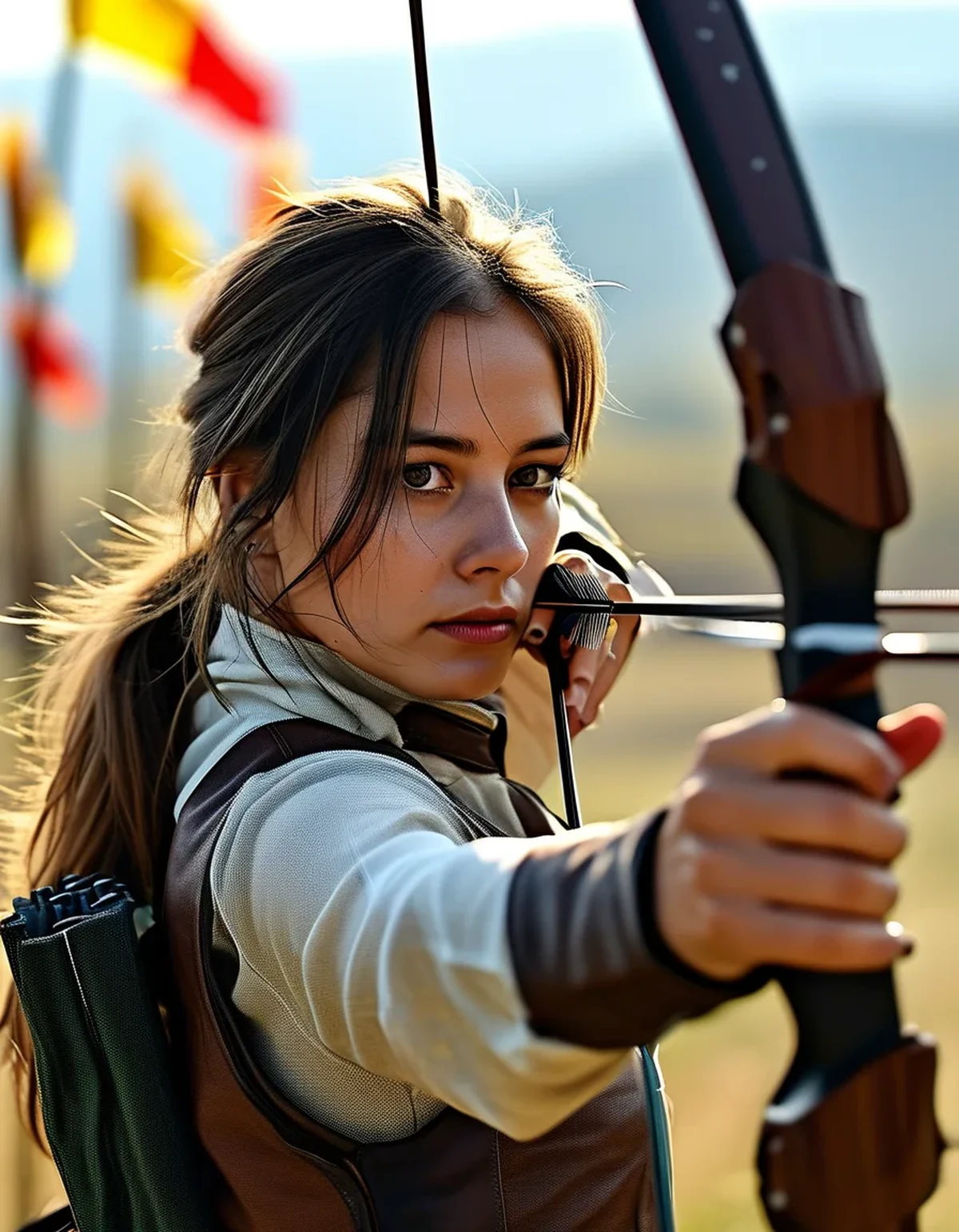
How much does wind actually move an arrow?
Less than most people assume at short distances, and more than most people plan for at long ones.
Drift scales with distance, arrow flight time, and the arrow’s surface area - and because flight time increases with distance, drift grows faster than distance does. Doubling the distance more than doubles the drift for the same wind.
What that means practically:
- At 18m indoors wind is irrelevant. If your groups open indoors, the cause is elsewhere
- At 30m in a light breeze drift is usually small enough to be inside your normal group size
- At 50-70m in a moderate crosswind drift becomes the dominant factor, and aiming off is required rather than optional
Crosswind matters most. A headwind or tailwind changes elevation slightly - a headwind drops arrows a little, a tailwind lifts them - but a full crosswind moves them sideways far more.
The useful mental model: wind acts on the arrow the whole way to the target, so the correction you need is proportional to how long the arrow is in the air. That’s why the same breeze that’s a non-issue at 30m is a scoring problem at 70m.
What should you change - and what should you never change?
This is the whole article in one section.
Change these:
- Your aim point. Aim off into the wind. This is the correct correction and the only one that doesn’t compromise your form
- Your timing. Shoot in the lulls. Watching the flags for ten seconds before drawing costs nothing and is the highest-value habit on a windy day
- Your let-down threshold. Be much more willing to come down and start over. A let-down costs a few seconds; a rushed shot costs a point and reinforces a bad habit
Never change these:
- Your draw length or anchor. Shortening the draw to get the shot off faster is the single most common windy-day error and it sends arrows low
- Your grip pressure. Squeezing the bow to hold it steady torques it and adds horizontal error that’s larger than the wind’s
- Your shot rhythm. Snap-shooting when the sight picture drifts across the middle is the habit that survives the windy day and ruins the next three months
The counterintuitive part: on a windy day you should shoot more deliberately, not faster. The bow will move in the wind and that is fine. Your sight picture is allowed to wander; your process is not.
How do you read the wind on a range?
With flags, grass, and your own arrows - in that order of reliability.
Flags are the standard reference. Look at the flag closest to the target rather than the one next to you, because most drift accumulates over the second half of the flight where the arrow is slowest.
A rough flag guide:
- Hanging limp to barely stirring: ignore it
- Fluttering at roughly 45 degrees: meaningful crosswind at 50m+
- Straight out and steady: significant, and aim-off is required at any distance over 30m
- Straight out and snapping around: variable direction, which is far harder than strong steady wind - shoot the lulls and accept wider groups
Grass and leaves fill the gap between flags, particularly near the ground where an arrow spends part of its flight.
Your own arrows are the best data you have. Shoot one, see where it lands, and adjust. Two arrows in the same place in the same conditions is a real correction; one arrow is a guess.
Log it. A note on your phone - distance, flag angle, how many rings you aimed off - builds a personal wind chart faster than any generic table, because it accounts for your bow, your arrows, and your speed.
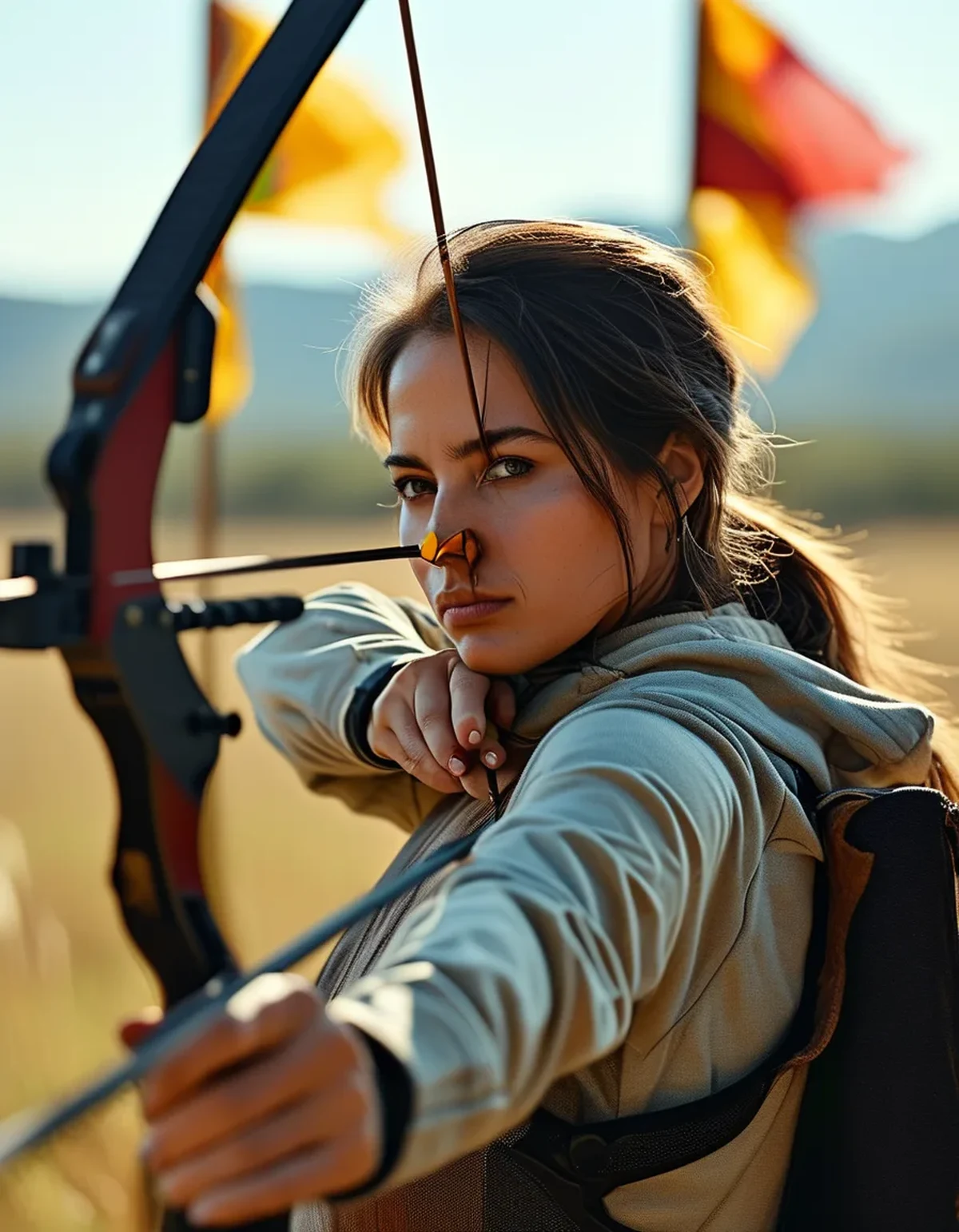
Myth vs Fact: Archery and Wind
Myth: Heavier arrows are immune to wind. Fact: Heavier arrows drift less for the same wind because they carry more momentum and often fly faster to the target in terms of time exposed - but the effect is a reduction, not immunity. Fletching size and arrow diameter also matter.
Myth: You should hold the bow tighter in wind. Fact: Grip pressure is one of the most consistent sources of horizontal error in archery. A tight grip on a windy day adds more error than it removes.
Myth: Aim off means tilt the bow. Fact: Canting the bow changes your sight geometry and introduces elevation error. Move your aim point, keep the bow vertical.
Myth: Everyone else is coping better than you. Fact: Wind flattens everyone’s scores, including the people who look calm. A windy-day score is not comparable to a calm-day score, and treating it as one is how people conclude they’ve lost form.
Myth: There’s no point practising in wind. Fact: It’s some of the most valuable practice available, because it forces the shot process to become genuinely independent of the sight picture. Most archers only ever practise in good conditions and then compete in bad ones.
How do you keep your form together on a bad day?
By narrowing what you’re trying to control.
Pick one thing per end. Not five. On a windy day, choose a single cue - back tension, or holding the follow-through, or the string reference on your face - and let everything else be whatever it is.
Accept a bigger sight picture. Trying to hold the pin dead still in a crosswind is impossible and the attempt produces tension, which produces worse shots than the wind does. Let the pin float within a zone and release inside the zone.
Shorten the session. Wind is mentally fatiguing and fatigue degrades anchor first. Twenty good arrows beats sixty deteriorating ones, and the sixty teach your body the wrong pattern.
Layer properly and keep warm. Cold, wind-chilled hands are a real accuracy problem in autumn shooting - the release gets less consistent before you notice you’re cold. A light windproof layer and keeping your hands warm between ends does more than any equipment change.
Re-baseline afterward. Shoot a calm-day end within a few days so you don’t carry a distorted picture of your form into the next month.
If you get shoulder or elbow pain from tensing up on hard days, stop and get it looked at rather than pushing through. This is general information, not medical advice.
FAQ: Shooting in Wind, Answered
Should I change my sight for wind?
Most target archers aim off instead, because wind changes minute to minute and a sight adjustment locks in a correction that may be wrong by the next end. Adjust the sight only in steady, sustained conditions.
Do smaller vanes help?
Lower-profile vanes reduce wind drift somewhat but also reduce the correction force that stabilises the arrow. It’s a trade, and it only pays off with good arrow tuning and clean release. Fix technique first.
Is a headwind or crosswind worse?
Crosswind, by a wide margin. Headwinds and tailwinds mostly shift elevation slightly, which is easier to read and correct.
How do I practise for wind if my range is sheltered?
Practise the mental part: shoot with a deliberately imperfect sight picture, use a shorter hold time, and practise letting down. The discipline transfers even when the conditions don’t.
TL;DR:
- Wind drift grows faster than distance - irrelevant at 18m, dominant at 70m
- Aim off, shoot the lulls, and let down freely; never change anchor, draw length, or grip pressure
- Read the flag nearest the target, and log your own corrections to build a personal chart
- Let the pin float; fighting for a still sight picture creates more error than the wind
- Shoot fewer arrows on windy days and re-baseline on a calm one afterward
The wind takes a couple of points. Panicking about the wind takes the rest of the round, and that part is optional.
Keep Reading
This article is for general informational and styling purposes only. Fit, sizing, and product availability may vary.